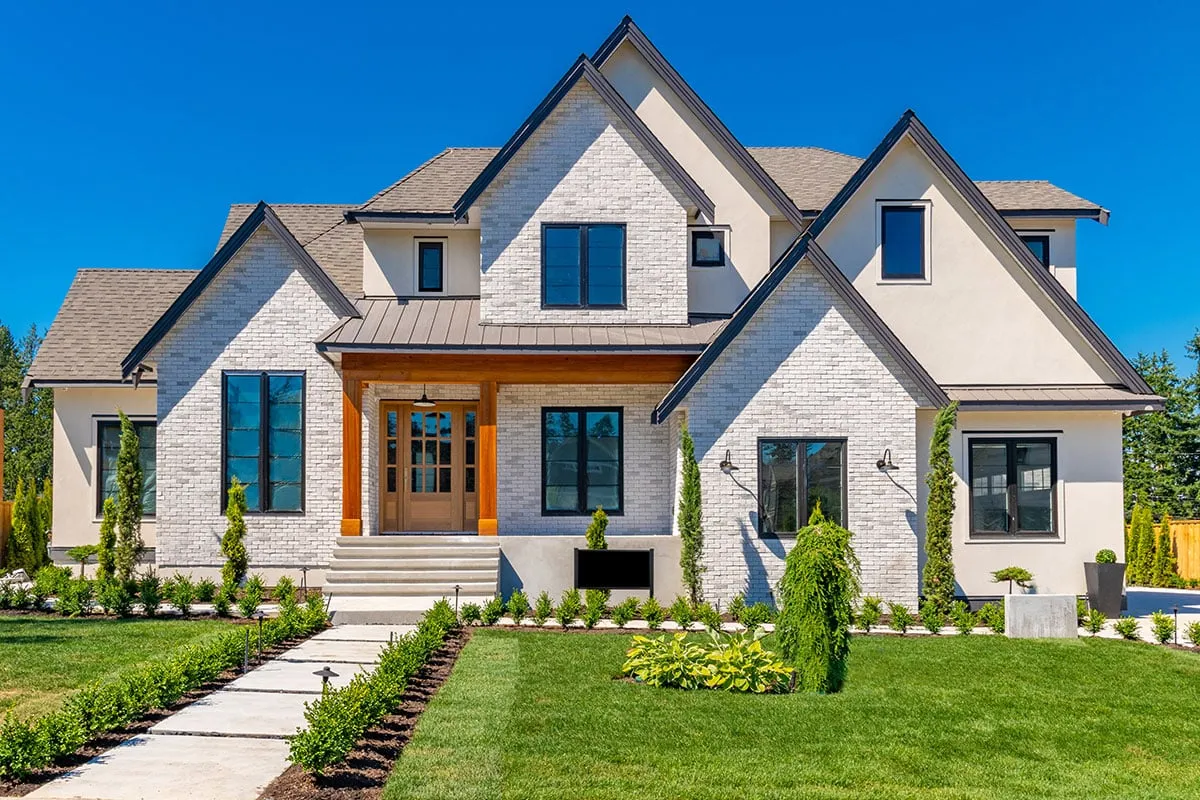
Not only are modern homes now changing in appearance, they are also changing in terms of functionality in the background. With more advanced and integrated systems, even significant upgrades such as a heat pump replacement are no longer a stand alone solution, but as a component of a larger, more integrated strategy as to how a home performs holistically.
What is Modern Home Design
The way a house looks is not exactly the definition of modern home design nowadays, but what matters is the way it functions.
Yes, you will have clean lines, open spaces and big windows. However, the thing that is now completely defining modern home design is performance: how well it is able to heat and cool, how well it is able to handle the air quality, how perfectly the technology can be able to operate in the background and how well the space adapts to reality.
The majority believes that the subject of modern home design revolves around aesthetics. Invisible performance not, it is about invisible performance.
Another way a modern home is differentiated is as a dynamic environment, rather than a fixed one. It adapts, streamlines and nurtures the individuals residing in it, without their even perceiving it.
The finest illustrations of contemporary architecture residences do not attract attention to their systems. You do not feel the air moving, the temperature changes or the light changes, as everything is already optimized.
The home design nowadays is characterized by the minimal amount of consideration you need to give to your surroundings. When you spend all day fiddling with the thermostat or opening the windows to get the place fixed, it is not really modern, though it may appear as such.
The Reason Modern Architecture Homes are Centered on Systems
Layout will not solve modern problems anymore. Open floor plans are attractive, but they pose a problem, such as unequal temperatures, difficulties in the circulation of air, and increased energy consumption. So modern architecture houses are now architecturally planned first then modelled around plan.
Without the systems being planned up front (HVAC zones, electrical loads, smart controls, or even as simple as whether or not to install a heat pump), the home will never work the way it is expected to regardless of how pretty it appears. Since discomfort can never be cured by layout, it can be cured by systems.
You may have a loveliest specimen of modern house design on the planet, and yet, when heat stagnates up the staircase, or when air does not circulate, or when some rooms are invariably stuffy, the plan is of no use.
The priorities have been reversed in modern architecture homes. Rather than posing the question How should this space look? designers proceed to pose the question How should this space perform throughout the day and year?
Consider it so: old houses were made, as furniture, fixed and visible. The homes of modern architecture are built in an infrastructure-like dynamic and functional way. Layout has become an outcome, rather than an initiator.
Basic Systems of Modern House Construction
Present-day houses have been constructed on the basis of several systems which interact: HVAC systems regulate temperature, humidity, and air quality, electrical systems serve the purpose of powering the entire range of functions (lighting, automation, etc.), plumbing systems regulate the delivery of water and its drainage, its efficiency, home automation systems connect and coordinate the work of all devices, the ventilation and air quality process filtration and circulation of fresh air, the building envelope, insulation, windows, sealing, and determine how the home preserves the energy.
The Systems are not Different in the House Design today, but their Purpose
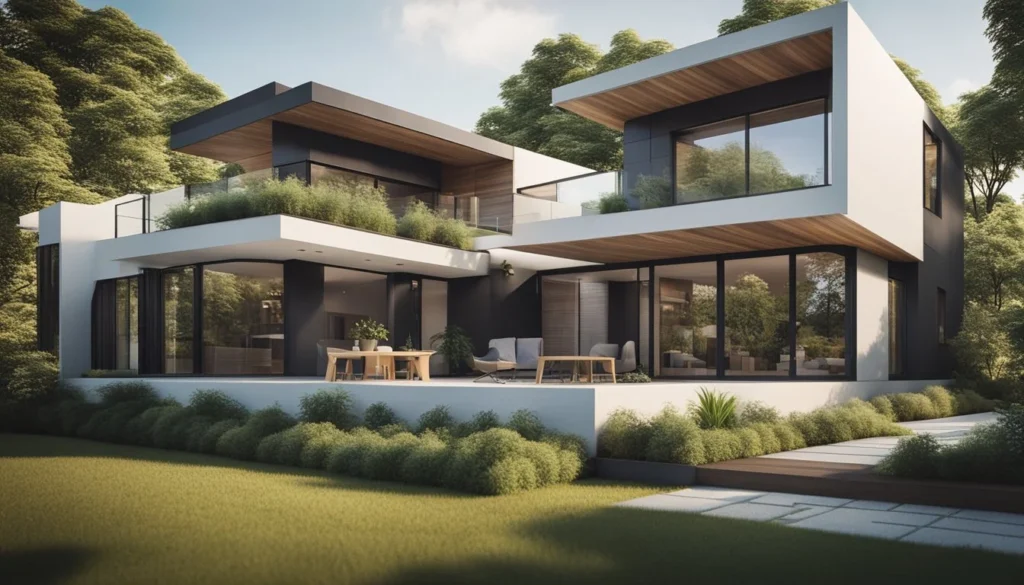
The difference today is that these systems are not in the background anymore, they define the experience of the home. HVAC makes the rooms comfortable, electrical keeps the devices constantly connected and in an ecosystem, ventilation keeps the health in the home through air quality and humidity, home automation systems make decisions less, and the building envelope makes the home a winner or a loser.
The notable change in modern house designs is that they are not independent anymore, they are synchronized. It is not that the systems have changed, it is the way that they are designed in a deliberate manner and in a unified fashion.
The Connection of the Modern Homes through a Home Integration System
The home integration system is the central nervous system of the house. Rather than both systems functioning separately, all things are interconnected in a single platform or ecosystem. Your thermostat will turn on and off depending on occupancy sensors, your lights will turn on and off based on the time of day as well as the natural lights, your HVAC will turn zones on and off based on what rooms are occupied, and your security, cameras, and door locks will communicate with your phone.
The only difference in a home integration system is not only control, but automation depending on behavior. The house gains patterns and produces minor decisions in-flight which brings the necessity to make small changes by hand.
Most individuals believe that a home integration system is like everything you can control driving on your phone. That’s the entry level. The actual integration is where systems cease to wait to be commanded.
Rather than telling your home what to do, the home looks at conditions and cools rooms before they get hot, turns lights on and off depending on the natural light, and turns air on and off depending on the location of people.
The object of a home integration system is not convenience, but to eliminate the necessity of running your home at all.
The Role of HVAC in the Modern Design of a Home
To most individuals, HVAC usually determines the design of a modern home first before any other consideration. The houses in modern times are smaller (more tightly sealed) that enhances efficiency and demands careful planning of airflow.
That influences ceiling heights and soffits (to duct route), room location (to zoning and load balance), window size and direction (heat gain/loss), and open floor plans, making control of airflow to be more complicated.
This is the truth: open spaces, big windows, and tall ceilings, which are the hallmarks of modern architecture homes, are beautiful to the eye yet difficult to keep the temperature. That makes design trade-offs, zoning is necessary not optional, placement of ducts affects both ceiling and wall design, placement of windows, placement of windows explicitly affects system sizing and airflow strategy may constrain or open up open spaces.
HVAC does not just go along with the design of many homes, it limits or makes it possible. In most instances, a properly designed HVAC can make a home either comfortable, or uncomfortable, to live in.
Nothing is a good design, however it looks, that is always too hot upstairs, or in winter too dry. HVAC is unobtrusively among the largest of the current home design considerations and one of the least discussed.
The way Home Automation Systems are Powered with Electrical Systems
Home automation systems are not powered merely by electricity, but on the basis of planned electrical systems.
The current electrical systems are made to accommodate the low-voltage wiring (to sensors and controls and network interfaces), the EV chargers, dedicated circuits to high-demand smart devices, to maintain the power supply at all times (hubs, routers, controllers), and to be able to connect to the backup power (such as batteries or generators).
That is to say, home automation systems do not operate solely on gadgets, but rely on a robust electrical base. The biggest error that most individuals commit is that smart home technology is plug-and-play.
The truth is home automation systems rely on infrastructure planned way before devices are actually put in place: load balancing to avoid strain on the system, correct circuit breakers, clean and stable power to accommodate always-on devices, low-voltage paths to sensors and controls, and electrical reliability built into the network.
Home automation systems cannot be depended upon, devices slow down, stop working, or malfunction because of lack of a properly designed electrical system.
Advantages of the Integrated Systems in Modern House Design
The greatest advantage is that all things cooperate rather than compete. That translates to improved comfort, stable temperatures, even air flow, better air quality, energy savings, reduced cost over time, fewer inefficiencies, reduced equipment wear, simplified control, a single interface rather than five different applications, and future flexibility, as the technology adapts.
Consistency is the Actual Advantage of Modern House Design
In an integrated home, all the rooms are similar, not too hot or cold, there is no huge variation in air quality, the lighting doesn’t seem artificial during the day, and all systems do not clash with each other (such as heating and cooling being on at the same time).
However, the true benefit lies in the fact that, with a well-integrated home, daily life will be free of friction. You cease to think about moving things about, and simply get at home. It is not a question of adding features, but rather getting rid of the small annoyances day after day that people have merely learned to live with.
The Power of Integrated Systems in Future Home
They are moving houses out of passive buildings to adaptive environments, which is how houses will be designed in the future.
Over the next few years, future home design will be about systems that anticipate their use and prepare in advance before you realize it has changed, use energy appropriately based on utility pricing or weather forecasts, constantly check air quality and automatically rectify it, integrate with electric cars and renewable energy systems, and become modular to allow systems to be upgraded without redesigning the entire home.
The design will no longer be a matter of space, it will be a matter of performance in the future. Houses are no longer user-dependent. Rather than creating homes that demand their occupants to use the home properly, future home design is shifting to homes that correct the inefficiencies themselves, responds to changes in occupancy, uses energy more efficiently without human intervention, and automatically keeps the air quality at an unchanging minimum, rather than increasing it when there are people inside.
The distinguished homes will not only appear modern. They will act smart, evolve constantly and silently make people live better on a day-to-day basis.
Home design in the future will not be reactive, it will be proactive. It is not smarter gadgets that will be the long-term direction, but lower user involvement. The smarter house is the one you only need to talk to once in a while.